The Role of Alumni Networks in the UAE for Graduates

TL;DR:
- Structured alumni mentorship programs in the UAE, like Khalifa University’s Athar, create accountability and measurable career outcomes. Large alumni reunions and recurring events foster community, trust, and professional connections that last beyond the events themselves. Graduates should actively engage early and consistently, leveraging both formal programs and informal social interactions for maximum career benefit.
Alumni networks in the UAE are defined as organized communities of graduates that provide career connections, mentorship access, and professional visibility within one of the world’s most internationally diverse job markets. For international students and graduates, these networks are not optional extras. They are structured systems that directly influence hiring outcomes, professional identity, and social belonging in a country where personal referrals carry significant weight. The role of alumni networks in the UAE spans everything from formal mentorship cohorts at Khalifa University to large-scale reunion events at the American University of Sharjah, and understanding how each model works gives you a real competitive advantage.
How structured alumni programs in the UAE support career progression
Structured alumni mentorship programs outperform informal contacts because they create accountability on both sides of the relationship. Khalifa University’s Athar program is the clearest example in the UAE. Its first cohort paired 31 alumni mentors with 47 senior students and 12 recent graduates over six months, incorporating panels, onboarding sessions, and separate mentor and mentee training workshops. That structure matters because it removes the awkwardness of cold outreach and replaces it with a defined workflow where both parties know what is expected.
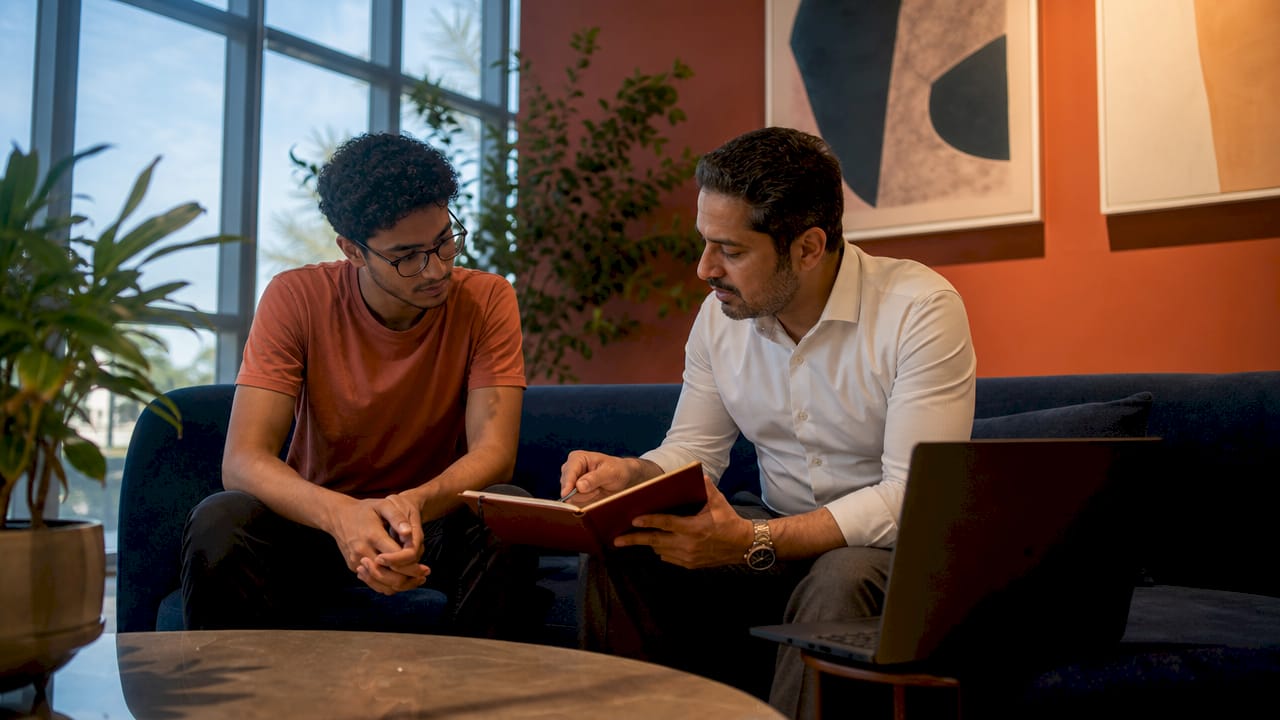
The program facilitated 59 active mentor-mentee connections across its first cohort, which is a meaningful number for a single university initiative. It signals that when institutions invest in programming rather than leaving graduates to self-organize, participation rates rise and outcomes become measurable. For international graduates who lack pre-existing local networks, this kind of structured entry point is especially valuable. You arrive with a mentor already assigned rather than spending months trying to identify the right person to contact.
The Athar model includes community-building activities alongside the one-on-one pairings, which reflects a broader truth about alumni mentorship programs UAE institutions run. Cohort activities create lateral connections between mentees, not just vertical ones between mentees and mentors. Those peer relationships often produce job leads and collaborations years after the formal program ends.
- Athar’s six-month cohort model gives both mentors and mentees a clear timeline and shared expectations
- Separate training sessions for mentors and mentees prepare both parties before the relationship begins
- Panel events expose mentees to multiple senior professionals beyond their assigned mentor
- Community-building activities create peer networks among mentees that outlast the program itself
Pro Tip: Before your first mentorship session, prepare three specific questions about your mentor’s career path and one concrete goal you want to achieve by the end of the program. Mentors respond far better to prepared mentees, and that preparation signals seriousness from the first meeting.
What makes UAE-based alumni networks uniquely valuable for professional visibility
The University of Strathclyde’s UAE Alumni Group demonstrates what a well-organized local alumni network looks like in practice. Senior alumni from this group hold positions at First Abu Dhabi Bank, ADNOC, Visa, and Big 4 accounting firms, and the group hosts monthly Meet and Mingle events alongside dialogue hubs, affinity groups, and an entrepreneurial advisory board program. That combination of seniority and recurring programming is what separates a functional network from a dormant LinkedIn group.
Recurring events matter more than most graduates realize. A single networking event produces introductions. Repeated attendance at the same events over several months produces trust. Trust is what converts a professional contact into someone who will forward your resume or mention your name in a hiring conversation. The UAE alumni network success stories that circulate within these groups almost always trace back to someone who showed up consistently, not someone who made one impressive appearance.
Affinity groups within larger alumni networks serve a specific function. They cluster graduates by industry, interest, or background, which makes conversations more targeted and referrals more relevant. An affinity group focused on finance, for example, connects you directly with alumni who understand your career context rather than requiring you to explain your goals from scratch at every general networking event.
- Monthly events create a predictable rhythm that makes consistent attendance easy to maintain
- Dialogue hubs and knowledge-sharing platforms extend the network’s value between in-person events
- Entrepreneurial advisory boards give startup-focused graduates access to experienced mentors outside formal mentorship programs
- Affinity groups reduce the noise of large networks by clustering members around shared professional interests
Pro Tip: Identify two or three senior alumni in your target industry within the network before attending your first event. Knowing who you want to meet and why makes your time at any networking event far more productive than arriving without a plan.
How alumni networks build community and social belonging in the UAE
Social belonging is the foundation that professional networking is built on, and large alumni reunion events in the UAE take that seriously. The American University of Sharjah’s 2026 alumni reunion brought together over 900 graduates in a single evening, with affinity corners, scholarship announcements, and speeches designed to reinforce shared identity across graduating classes. An event at that scale does something a mentorship program cannot: it creates a sense of collective belonging that makes graduates feel invested in the network’s success, not just their own.
That investment in shared identity has a direct professional payoff. Graduates who feel connected to their alumni community are more likely to refer others, respond to outreach, and participate in future events. The social infrastructure built at reunions seeds the professional conversations that happen in the months that follow. Here is how large alumni events typically create lasting value:
- Affinity corners group graduates by shared background or interest, making it easier to find relevant connections in a large crowd
- Scholarship announcements and institutional updates remind graduates that their university is still active and worth engaging with
- Intergenerational mixing puts recent graduates in the same room as alumni who graduated decades earlier, creating mentorship opportunities that would not arise in age-segmented settings
- Cross-disciplinary conversations at social events often produce unexpected professional connections that structured programs would never generate
The University of Sharjah Alumni Association extends this community model internationally, with branches in multiple countries that support expatriate graduates in building their UAE professional identity from abroad. For international students who return to their home countries after graduating, these branches serve as collaboration and mobility hubs connecting them with experienced alumni who understand UAE immigration and career paths firsthand.
How to leverage UAE alumni networks in your job search
The most common mistake graduates make when using alumni networks is treating them as a direct job application channel. Vault’s guidance on effective alumni outreach is clear: start with 5 to 10 well-chosen contacts, focus on conversations about guidance rather than immediate job requests, and maintain light, consistent contact over time. That approach works because alumni prefer mentoring over being asked for favors by strangers. Referrals are a byproduct of a real relationship, not a reward for a well-written cold message.
Research from UC Berkeley shows that alumni connections influence location decisions and economic opportunity after job loss, meaning the network’s value extends well beyond the initial job search. In the UAE context, this is particularly relevant for international graduates who are deciding whether to stay in the country or relocate. Alumni who have navigated that same decision are uniquely positioned to give you honest, specific advice that no career website can replicate.
Practical outreach works best when it is personal and specific. Mentioning a shared professor, a specific program, or a project you worked on at the same university immediately differentiates your message from generic networking requests. Career path clarity also matters here: alumni respond more readily to graduates who can articulate what they are looking for rather than asking for general help.
- Start with 5 to 10 alumni contacts rather than mass-messaging your entire network
- Ask for a 20-minute conversation about their career path, not a job referral
- Follow up with a brief thank-you message and one specific takeaway from the conversation
- Check in every few months with a relevant article or update, not another request
- Let referrals emerge naturally from the relationship rather than requesting them directly
Pro Tip: When reaching out to alumni on LinkedIn, reference one specific detail from their profile, such as a company they worked at or a project they completed, to show you have done your research. Generic messages get ignored; specific ones get responses.
Comparing alumni engagement approaches and their career impact
Different alumni engagement models serve different career and community needs. Choosing the right combination depends on where you are in your career and what you need most at a given moment.
| Engagement type | Best for | Key benefit | Example in UAE |
|---|---|---|---|
| Structured mentorship cohorts | Recent graduates entering the job market | Accountability, defined timelines, and direct access to senior professionals | Khalifa University’s Athar program |
| Local alumni group events | Mid-career professionals building sector visibility | Repeated exposure to senior alumni in target industries | University of Strathclyde UAE Alumni Group |
| Large-scale reunions | All graduates seeking community and cross-disciplinary connections | Social belonging, intergenerational networking, and institutional reconnection | American University of Sharjah annual reunion |
| International alumni branches | Graduates outside the UAE maintaining professional ties | Mobility support, diaspora connections, and UAE career re-entry guidance | University of Sharjah Alumni Association branches |
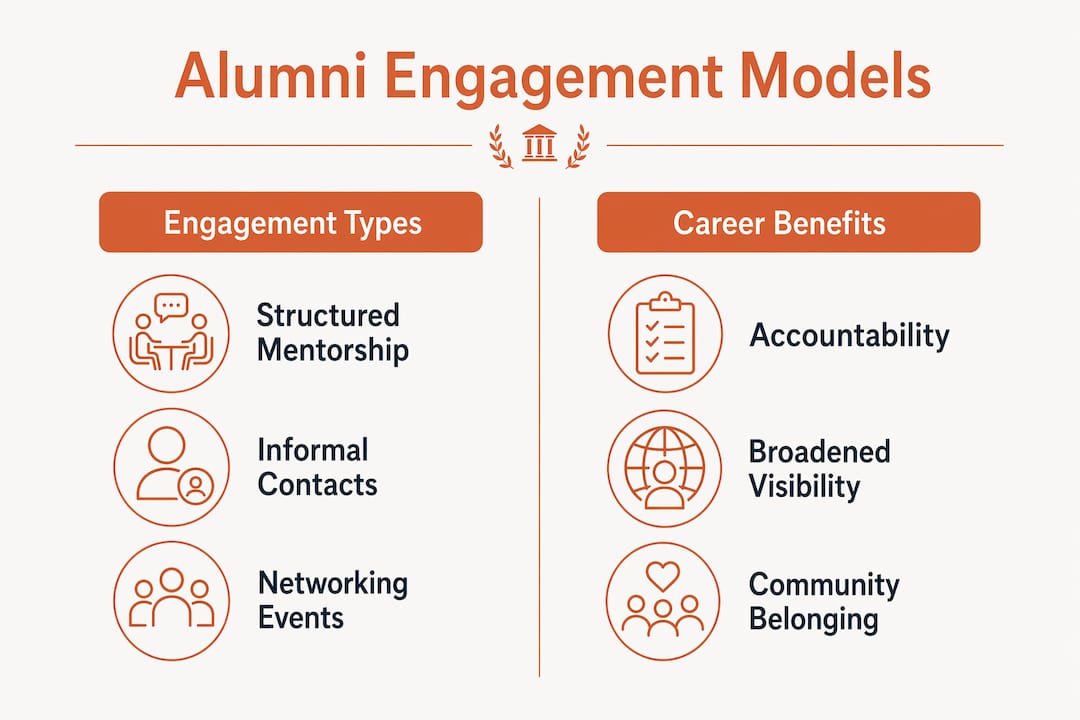
The strongest career outcomes come from combining at least two of these models. A graduate who participates in a structured mentorship program and attends recurring local alumni events builds both a formal mentor relationship and a broader professional network simultaneously. Structured and repeated engagement is what separates graduates who extract lasting value from alumni networks from those who attend one event and never follow up.
Alumni networks also influence career geography in ways that matter for international graduates. When a strong alumni cluster exists in a specific city or sector, graduates are more likely to pursue opportunities in that location because the network reduces the risk of starting somewhere unfamiliar. In the UAE, where sectors like finance, energy, and technology are concentrated in Abu Dhabi and Dubai, alumni groups anchored in those cities give international graduates a real foothold.
Key takeaways
Alumni networks in the UAE deliver the strongest career outcomes when graduates combine structured mentorship programs with consistent participation in local alumni group events and large community gatherings.
| Point | Details |
|---|---|
| Structured programs outperform informal contact | Khalifa University’s Athar program shows that defined cohorts and training sessions produce measurable mentorship outcomes. |
| Recurring events build trust over time | Consistent attendance at alumni group events converts introductions into referrals more reliably than one-time appearances. |
| Social events seed professional conversations | Large reunions like AUS’s 900-person gathering create the shared identity that makes professional exchange feel natural. |
| Start outreach with 5 to 10 targeted contacts | Vault’s guidance confirms that focused, relationship-first outreach produces better results than broad, request-heavy messaging. |
| International branches extend network value globally | University of Sharjah’s multi-country alumni branches support graduates outside the UAE in maintaining and re-entering UAE professional circles. |
Why I think most graduates underuse the best part of UAE alumni networks
Most graduates I have observed treat alumni networks as a last resort, something to activate only when a job search stalls. That is exactly backwards. The graduates who get the most from UAE alumni networks are the ones who engage before they need anything, attending events, joining affinity groups, and showing up to mentorship programs while they are still students or in the early months after graduation.
The UAE has a specific dynamic that makes this timing even more important. Senior professionals here move between organizations frequently, and the alumni who are most useful to you today may be in a completely different role or company within two years. Building the relationship early means you have a genuine connection before their circumstances change, not a cold contact you are trying to warm up under pressure.
I have also noticed that graduates consistently undervalue the social side of alumni engagement. Affinity corners at reunions and informal conversations at monthly meetups feel less serious than a structured mentorship session, but they often produce the most unexpected and valuable connections. A conversation about a shared hometown or a mutual professor can open a professional door that a formal introduction never would.
The other thing worth saying directly: alumni networks are a two-way system. The graduates who get the most referrals and introductions are almost always the ones who have given something first, whether that is sharing a job posting, making an introduction, or simply showing up and contributing to the community. Approach the network as a participant, not a consumer, and the returns compound over time.
— Jogo
Find the right UAE university with a strong alumni network
Choosing a university with an active alumni community is one of the most practical decisions you can make as an international student. The mentorship programs, networking events, and career connections you access after graduation depend directly on the institution you attend.
Find-my-uni makes it straightforward to compare UAE universities based on their academic programs and graduate support systems. You can explore universities in Dubai and Abu Dhabi with detailed profiles that include alumni engagement information, or go directly to institutions like Khalifa University to learn about programs like Athar. Use the university finder to match your academic profile with institutions that have the alumni infrastructure to support your career goals from day one.
FAQ
What is the role of alumni networks in the UAE?
Alumni networks in the UAE connect graduates with career mentorship, professional referrals, and community belonging through structured programs and recurring events. They are particularly valuable for international graduates who need to build local professional visibility quickly.
How does Khalifa University’s Athar program work?
Athar pairs alumni mentors with senior students and recent graduates in six-month cohorts that include onboarding, training sessions, and community events. The first cohort facilitated 59 active mentor-mentee connections across 31 mentors and 59 participants.
How should I approach alumni networking in the UAE?
Start with 5 to 10 well-chosen contacts and focus on asking for career guidance rather than job referrals. Consistent, light contact over time builds the trust that eventually produces referrals and introductions.
Are there alumni networks in the UAE for international graduates?
Yes. Groups like the University of Strathclyde UAE Alumni Group and the University of Sharjah Alumni Association actively include international graduates and maintain branches in multiple countries to support alumni outside the UAE.
Do alumni networks affect where graduates choose to work?
Research from UC Berkeley shows that alumni connections influence location decisions and economic opportunity after job loss, meaning strong alumni clusters in cities like Dubai and Abu Dhabi actively attract graduates to those markets.