Top ways for students to explore Dubai on a budget
TL;DR:
- Dubai is accessible to students on a budget through public transport and free cultural experiences.
- Free beaches, markets, museums, and low-cost transport options offer rich cultural exploration.
- Planning activities seasonally and using student discounts maximizes value and authentic city experiences.
Dubai has a reputation for luxury that can make even the most adventurous student hesitate. Gold-plated everything, sky-high restaurants, and designer malls are the images that dominate social media feeds. But here’s the reality: the city is genuinely accessible on a student budget if you know where to look. From free beaches to AED 1 boat rides across historic waterways, Dubai rewards the curious and the resourceful. This guide pulls together research-backed strategies, real cost breakdowns, and insider tips to help you experience Dubai’s cultural depth without draining your bank account.
Table of Contents
- Smart transport for student explorers
- Free and authentic cultural experiences
- Relaxing at Dubai’s public beaches and nature spots
- Must-see free attractions and art in Dubai
- Affordable museums and hidden student perks
- What most students overlook when exploring Dubai
- Find your perfect university and unlock Dubai student life
- Frequently asked questions
Key Takeaways
| Point | Details |
|---|---|
| Student transport savings | The student nol card halves travel costs and provides discounts across Dubai’s top attractions. |
| Free cultural immersion | Students can explore historic neighborhoods, museums, and local heritage sites without spending extra. |
| Beach and nature escapes | Public beaches and nature spots offer relaxing retreats that are free year-round, especially ideal in winter. |
| Art and urban attractions | Dubai Mall and art events give students unique experiences at no cost, perfect for social outings. |
| Museums and student perks | Student discounts, food hacks, and souk bargains help stretch your budget and diversify your Dubai experience. |
Smart transport for student explorers
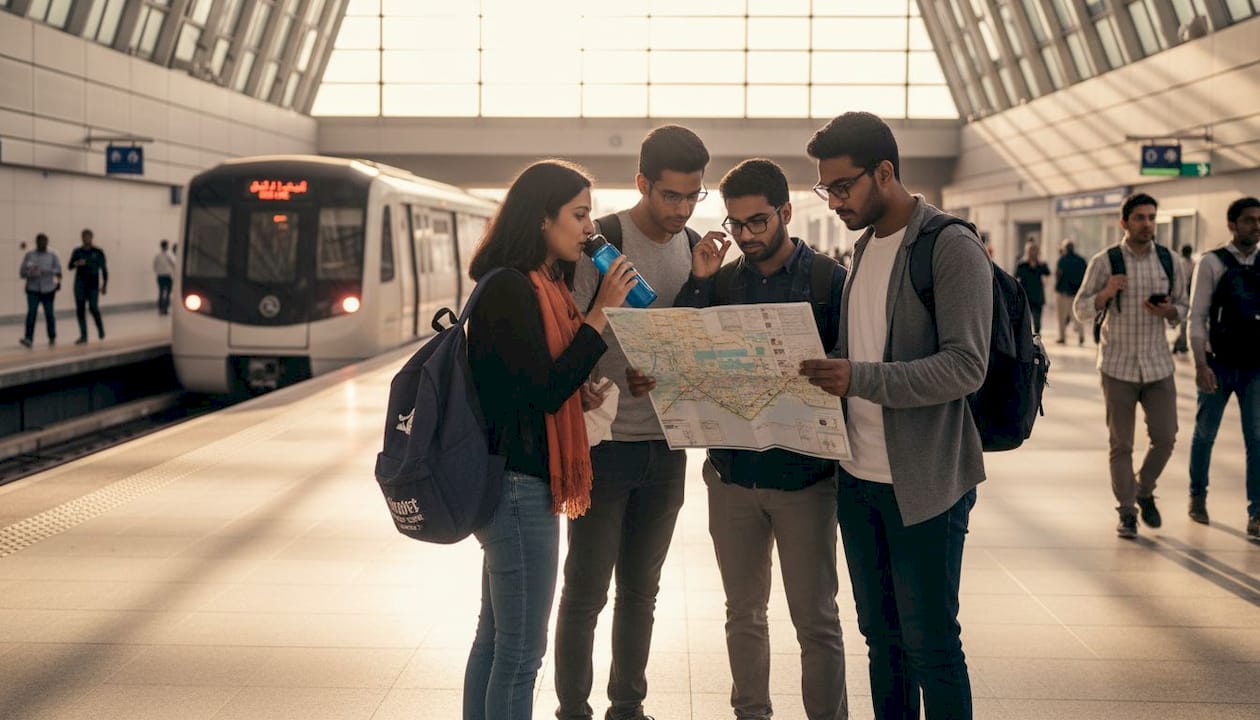
Getting around Dubai efficiently is the single biggest factor in keeping your daily costs low. The city’s public transport network is modern, air-conditioned, and surprisingly extensive. For international students, it gets even better.
The student nol card gives you 50% off Dubai Metro, bus, and tram fares, plus additional discounts on shopping, dining, and attractions, effectively doubling as an international student ID. To apply, you need to be aged 6 to 23 and enrolled at a UAE institution. The application goes through the nol Pay app, and once approved, the card works across the entire RTA network.
Here’s a quick breakdown of what the card covers:
- Dubai Metro: 50% off all zones
- Public buses: Half-price fares on all routes
- Dubai Tram: Discounted rides along the Marina and JBR corridor
- Partner attractions and retailers: Additional savings at select venues
Knowing which Metro lines reach cultural hotspots saves both time and money. The Red Line connects you to Al Fahidi (Union Station), Dubai Mall (Burj Khalifa/Dubai Mall Station), and JBR (DAMAC Properties Station). The Green Line runs through Deira and older neighborhoods rich with history.
| Destination | Nearest Metro Station | Approx. Fare (with student card) |
|---|---|---|
| Al Fahidi Historic District | Union | AED 2.50 |
| Dubai Mall | Burj Khalifa/Dubai Mall | AED 3.00 |
| JBR Beach | DAMAC Properties | AED 3.00 |
| Alserkal Avenue | First Gulf Bank | AED 2.50 |
For daily budgeting, a realistic student spend in Dubai runs AED 100 to 400 per day when you factor in transport, food, and free attractions. Staying on the lower end is very achievable when you combine public transit with meals from local spots rather than mall food courts.
Pro Tip: Pair your Metro commute with a stop at a local shawarma spot near the station. You’ll eat well for under AED 15 and skip the tourist markup entirely.
If you’re planning your studying in Dubai experience, locking in your transport strategy early sets the tone for everything else.
Free and authentic cultural experiences
With affordable transport sorted, your next move is targeting experiences that cost little to nothing but deliver enormous cultural value.
Al Fahidi Historical Neighbourhood is the starting point for any serious cultural explorer. This preserved district of wind-tower architecture and narrow lanes sits along Dubai Creek and feels worlds away from the glass towers nearby. You can spend two to three hours wandering for free, ducking into small galleries and courtyard cafes. The Al Fahidi district and free museums like the Coffee Museum and Coin Museum offer genuine Emirati heritage insights without an entry fee.
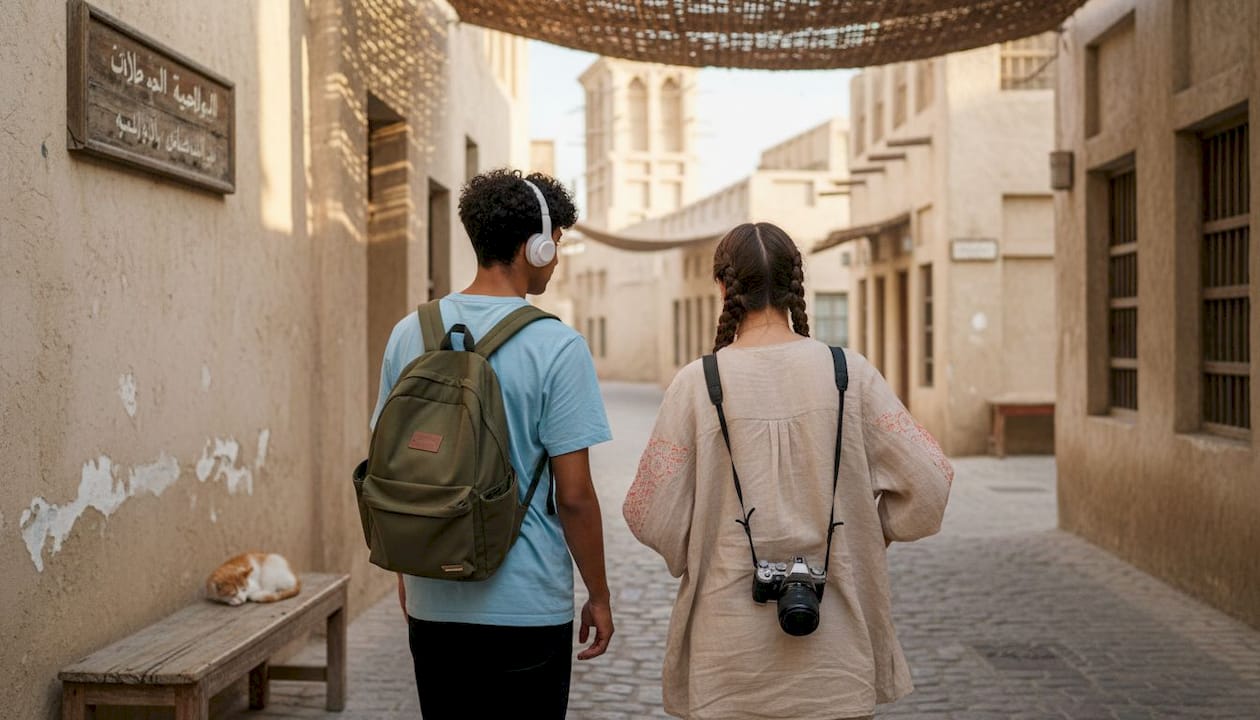
From Al Fahidi, walk to the Creek and take an abra. These traditional wooden boats have ferried people across Dubai Creek for generations, and today the AED 1 abra ride is one of the most authentic experiences in the city. It takes about five minutes and drops you directly into the Deira Spice Souk area.
Here’s a comparison to help you prioritize:
| Activity | Cost | Cultural Value |
|---|---|---|
| Al Fahidi walking tour | Free | Very high |
| Coffee Museum | Free | High |
| Abra across Dubai Creek | AED 1 | Very high |
| Dubai Frame entry | AED 50 | Moderate |
| Desert safari (tourist) | AED 150+ | Moderate |
“Prioritize public transport with your student nol card to access most sites affordably. Combine free cultural walks in Old Dubai with evening fountain shows for high-impact, low-cost days.”
For students focused on living in Dubai as a student, these free cultural touchpoints build a much richer understanding of the UAE than any paid tour could.
Relaxing at Dubai’s public beaches and nature spots
Dubai’s coastline is one of its best-kept budget secrets. Several world-class beaches are completely free and easily reachable by public transport.
The top public beaches for students include:
- JBR Beach (Jumeirah Beach Residence): Lively, social, great for meeting other students
- Kite Beach: Watersports culture, food trucks, and a relaxed vibe
- Palm West Beach: Stunning Atlantis views, less crowded than JBR
- Jumeirah Open Beach: Local favorite, quieter and more relaxed
All four beaches are free to access and offer clean facilities. JBR and Kite Beach are both reachable via the Dubai Tram, making them especially convenient with your student nol card.
For nature beyond the beach, Al Qudra Lakes in the desert outskirts is a favorite winter escape. You’ll spot flamingos, cycling paths, and open desert skies. The catch is timing. Summer heat from May to September makes outdoor activity genuinely risky, so beaches and parks are best enjoyed from October through April. In summer, stick to early morning visits before 9 a.m. or head to indoor free attractions instead.
For student life in Dubai, building a seasonal activity calendar makes a real difference in how much you enjoy the city year-round.
Pro Tip: Stop at a Carrefour or Lulu Hypermarket before heading to the beach. A bottle of water, fruit, and a snack costs under AED 20 and means you won’t need to spend AED 50 on a beachside smoothie.
Must-see free attractions and art in Dubai
Dubai’s urban landscape is packed with free spectacles that most tourists pay to experience indirectly through expensive dinners and hotel stays. You can skip that entirely.
Dubai Mall is worth visiting purely for its free attractions:
- Indoor waterfall: A striking multi-story installation near the Fashion Avenue entrance
- Aquarium viewing panel: The massive tank is visible for free from the ground floor
- Dinosaur skeleton: A real diplodocus fossil on display near the main atrium
These free Dubai Mall attractions make for a genuinely impressive outing without spending a dirham on entry fees.
The Dubai Fountain is the unmissable evening event. The fountain show runs every 30 minutes from around 6 p.m. at Downtown Dubai, and the best free viewing spots are along the Burj Lake boardwalk. Combine this with a walk through the mall and you have a full evening for the cost of Metro fare.
For art lovers, Alserkal Avenue galleries and DIFC Art Nights offer rotating contemporary art exhibitions with free entry. DIFC Art Nights typically runs in April and draws both local and international artists.
| Attraction | Location | Best Time | Cost |
|---|---|---|---|
| Dubai Fountain show | Downtown Dubai | 6 p.m. onwards | Free |
| Dubai Mall aquarium panel | Dubai Mall | Anytime | Free |
| Alserkal Avenue galleries | Al Quoz | Weekends | Free |
| DIFC Art Nights | DIFC | April (seasonal) | Free |
For Dubai attractions for students, combining two or three of these in a single outing creates a full day of experiences for under AED 30 in transport costs.
Affordable museums and hidden student perks
Beyond the free tier, a handful of museums charge modest fees that shrink further with student discounts. Al Shindagha Museum is the standout. As the UAE’s largest open-air heritage museum, it covers the history of Dubai’s pearl diving, trading, and maritime past through immersive exhibits. Entry runs around AED 8 to 13 with student discounts, making it exceptional value.
Here’s how to maximize every museum visit and student perk:
- Always carry your student ID and ask for a discount before paying full price
- Check the museum’s website for free entry days or student-specific promotions
- Visit on weekday mornings to avoid weekend crowds
- Combine museum visits with nearby free attractions to build a full itinerary
- Download the Dubai Calendar app for updated free and discounted event listings
For food, the rule is simple: eat shawarma and street food priced at AED 5 to 10 rather than mall restaurants. The Deira and Bur Dubai areas are packed with affordable spots serving everything from biryani to falafel wraps. Souks are also worth visiting for affordable souvenirs, and haggling is both expected and effective.
The nol ISIC card benefits extend to 130+ countries, so the value of applying goes well beyond Dubai itself. Students aged 6 to 23 enrolled in UAE institutions can apply through the nol Pay app.
Pro Tip: Use your student ID at non-tourist spots too. Local pharmacies, bookstores, and even some gyms offer student rates that aren’t advertised.
For university student perks, the combination of transport savings, museum discounts, and food hacks can reduce your weekly leisure spend significantly.
What most students overlook when exploring Dubai
Here’s the honest observation after working with hundreds of international students navigating Dubai: most default to malls. It’s understandable. Malls are air-conditioned, familiar, and full of recognizable brands. But they’re also the most expensive and least memorable way to spend your time in one of the world’s most layered cities.
The students who get the most out of Dubai are the ones who plan around seasonal rhythms and use their student nol card as a passport to the whole city, not just the tourist circuit. They mix Old Dubai’s alleyways with modern art spaces. They eat where locals eat. They go to the beach on a Tuesday morning instead of a Friday afternoon.
The deeper insight is that Dubai’s best experiences are often the ones that cost the least. The Creek, the abra, the spice souk, the fountain at dusk. These are the memories that last. For study abroad insights, this mindset shift from consumer to explorer is what separates a good semester abroad from a truly transformative one.
Pro Tip: Plan your week with a mix of indoor and outdoor activities, and deliberately avoid Fridays and Saturdays at major attractions. You’ll get better experiences and shorter lines.
Find your perfect university and unlock Dubai student life
Exploring Dubai affordably becomes even more rewarding when you’re settled into the right academic environment. The university you choose shapes not just your degree but your entire social and cultural experience in the city.
At Find My Uni, we help international students find universities in Dubai that match their academic profile, budget, and lifestyle goals. Our AI-powered matching system connects you with accredited programs, and our team supports you through admissions, visa processing, housing, and arrival. If you’re ready to turn Dubai from a destination into your home base for the next few years, we’re the right starting point.
Frequently asked questions
How do I apply for a Dubai student nol card?
International students aged 6 to 23 enrolled at UAE institutions can apply for a nol ISIC card via the nol Pay app, which gives 50% off Metro fares and discounts at partner venues.
What are the best budget-friendly activities for students in Dubai?
Walking Al Fahidi, riding abra boats, visiting public beaches, and exploring free mall attractions are top choices. Free museums and beaches like JBR and Kite Beach are consistently popular with students, and all four public beaches are accessible without any entry fee.
When is the best time of year for students to explore Dubai outdoors?
Winter months from October to April are ideal for beaches and parks. Summer heat from May to September makes outdoor activity difficult, so indoor venues or very early morning outings are the better option.
How much should students budget daily for exploring Dubai?
A daily spend of AED 100 to 400 comfortably covers transport, meals, and most free attractions. Choosing street food and public transit keeps you firmly at the lower end of that range.