How to support your child studying in Dubai: a parent’s guide
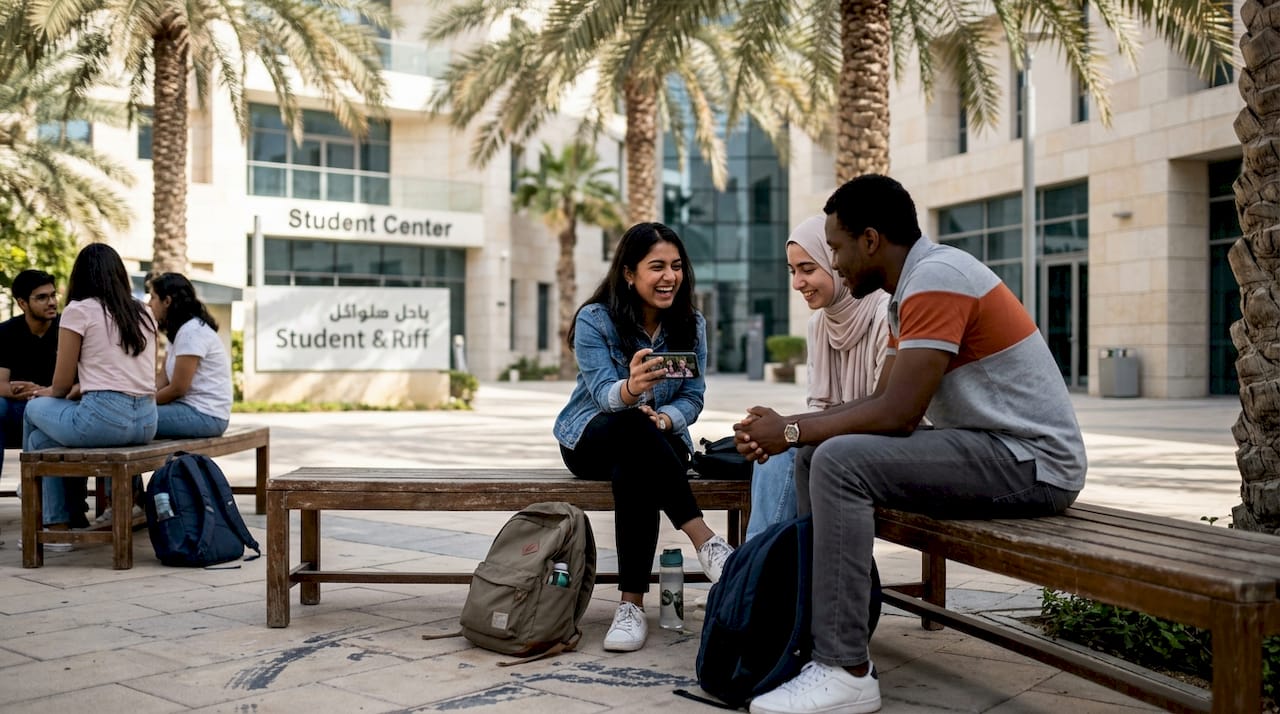
Sending your child to university in Dubai is one of the most exciting decisions a family can make, and one of the most nerve-wracking. You’re navigating a new education system, a different culture, visa paperwork, and the quiet worry of whether your teenager will truly be okay thousands of miles away. The good news is that with the right preparation and a clear road map, you can move from anxious bystander to confident co-pilot. This guide walks you through every critical stage, from understanding real costs to keeping your child emotionally grounded once they arrive.
Table of Contents
- Understanding university life and costs in Dubai
- Start early: Preparing your teen for Dubai university
- Navigating visa requirements and documentation
- Supporting integration and emotional well-being
- Staying connected and fostering independence
- How Find My Uni can help streamline your child’s success in Dubai
- Frequently asked questions
Key Takeaways
| Point | Details |
|---|---|
| Plan finances carefully | Know tuition and living costs upfront to avoid unwelcome surprises. |
| Prepare early | Start academic planning in Grade 9-10 for the best results. |
| Handle paperwork together | Student visa processes are smoother when parents assist with documentation and tracking. |
| Balance support and independence | Stay connected, but let your child use university and peer resources to grow. |
| Leverage local expertise | Use university support programs and services to ease cultural and academic adjustment. |
Understanding university life and costs in Dubai
To lay the foundation for supporting your child, it’s crucial to first understand what life as an international student in Dubai truly involves.
Dubai hosts over 70 accredited universities and colleges, drawing students from more than 170 nationalities. That level of diversity is genuinely rare, and it means your child will be learning alongside peers from every corner of the world. But diversity also comes with a price tag. Tuition and living costs vary widely depending on the institution and program, so parents need to plan carefully.
Here’s a realistic breakdown of what to budget for:
| Expense | Estimated annual cost (AED) |
|---|---|
| Tuition fees | 40,000 to 100,000 |
| Accommodation | 27,000 |
| Monthly living expenses | 3,000 per month (36,000/year) |
| Visa and admin fees | 3,000 to 5,000 |
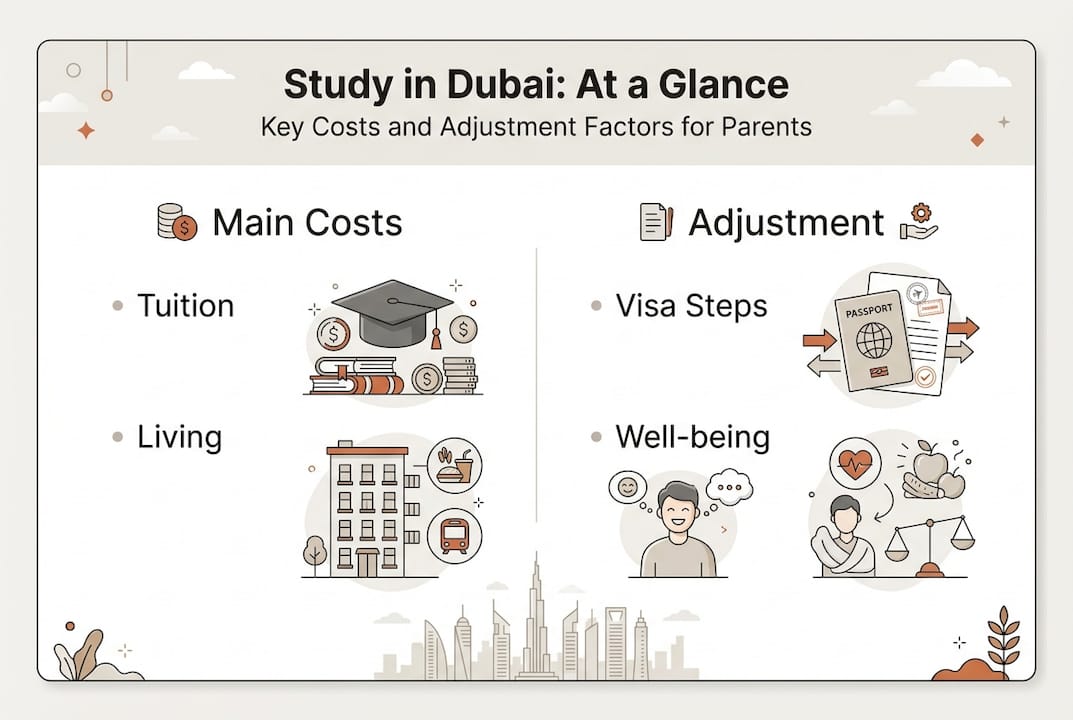
Beyond the numbers, quality matters. The KHDA regulates private education in Dubai and rates universities on teaching quality and graduate employability. Checking a university’s KHDA rating before committing is one of the smartest moves a parent can make, though it’s worth noting that full inspections are currently paused.
Here are the key factors to evaluate when reviewing Dubai university options:
- Accreditation status: Look for institutions recognized by the UAE Ministry of Education.
- Student-to-faculty ratio: Smaller ratios often mean more personalized academic support.
- Campus safety record: Dubai is consistently ranked among the world’s safest cities, but campus-specific policies still matter.
- Career services: Strong employer networks in Dubai can directly impact your child’s post-graduation prospects.
- Multicultural environment: A diverse campus accelerates social integration and builds global communication skills.
Pro Tip: Ask universities directly for their graduate employment rate. A figure above 80% within six months of graduation is a strong indicator of program quality.
Start early: Preparing your teen for Dubai university
With an understanding of costs and university life, parents can take the next step: strategic early preparation, which makes all the difference.
University preparation should start as early as Grade 9 or 10. That might sound premature, but competitive programs in Dubai fill quickly, and strong applications take time to build. Here’s a practical timeline to follow:
- Grade 9 to 10: Begin SAT or ACT prep, identify extracurricular strengths, and research program options.
- Grade 11: Shortlist universities, attend open days or virtual tours, and connect with an admissions consultant.
- Grade 12 (first semester): Submit applications, gather recommendation letters, and finalize financial planning.
- Grade 12 (second semester): Confirm enrollment, begin visa paperwork, and arrange housing.
For families exploring finding Dubai universities that match a specific academic profile, starting this process early gives you real leverage. You’re not rushing decisions; you’re making them with clarity.
“The families who struggle most are the ones who start the application process in Grade 12 with no prior research. The ones who thrive start conversations in Grade 10.” — Education consultant perspective shared across UAE admissions forums.
If your child is on a tighter timeline, there are fast-track preparation options worth exploring, though the standard route gives more room to build a compelling application.
Pro Tip: Extracurricular activities are not just resume fillers for Dubai universities. Leadership roles, community service, and creative projects genuinely differentiate applicants in competitive programs like business and engineering.
Navigating visa requirements and documentation
After academic and personal prep, getting through the paperwork, especially visas, can be daunting but is manageable with the right road map.
The good news is that universities sponsor 1-year renewable student residence visas, which takes a significant burden off families. The university acts as the official sponsor, but parents still need to gather and verify several documents on their end.
Here’s a side-by-side look at responsibilities:
| Responsibility | University’s role | Parent/student’s role |
|---|---|---|
| Visa sponsorship | Submits application to GDRFA | Provides required documents |
| Medical fitness check | Guides student to approved centers | Student completes the test |
| Emirates ID | Initiates process post-arrival | Student attends biometrics |
| Proof of funds | Not required from university | Bank statement from parent/guardian |
| Admission letter | Issues official letter | Submits to visa authority |
The step-by-step document checklist for parents:
- Valid passport (minimum 6 months validity beyond the intended stay).
- Official university admission letter.
- Recent passport-sized photographs.
- Proof of financial support, typically a bank statement.
- Medical fitness certificate from a UAE-approved clinic.
- Health insurance documentation.
The most common pitfall families face is submitting documents with inconsistent name spellings across different forms. Double-check that your child’s name appears identically on every single document before submission.
Supporting integration and emotional well-being
Once your child arrives, supporting their adjustment to Dubai’s unique environment can greatly influence their confidence and sense of belonging.

Adjustment challenges are real and predictable. International students commonly face homesickness, cultural disorientation, and academic pressure simultaneously in the first semester. Knowing this in advance helps both you and your child normalize the experience rather than panic.
Common integration challenges and how to address them:
- Homesickness: Encourage your child to personalize their living space and establish a weekly routine quickly.
- Cultural adjustment: Dubai’s multicultural environment is an asset, but navigating local customs takes time. Encourage curiosity over judgment.
- Academic pressure: Different grading systems and teaching styles can be jarring. Tutoring centers and faculty office hours are underused resources.
- Social isolation: Joining one club or student organization in the first two weeks dramatically reduces the risk of prolonged isolation.
Most Dubai universities offer structured student support services including orientation weeks, peer mentorship programs, and English as an Additional Language support. Encourage your child to use these actively, not just when things go wrong.
“Students who engage with campus support in the first month are significantly more likely to complete their degree without major disruptions.” — Insight from UAE school integration research.
For a broader perspective on what the global study integration experience looks like across different countries, it helps to understand that Dubai’s challenges are not unique, but its solutions are particularly well-resourced.
Pro Tip: Schedule a video call with your child within the first 48 hours of arrival, not to check up, but to celebrate. That small shift in framing sets a positive tone for the months ahead.
Staying connected and fostering independence
After tackling integration challenges, maintaining the right level of connection as a parent is key for your child’s long-term stability and achievement.
The balance between staying close and letting go is genuinely hard. Regular check-ins and emotional support matter enormously, but micromanaging from a distance creates anxiety rather than security. The goal is to be a reliable anchor, not a hovering presence.
Practical strategies that work:
- Set a weekly call schedule rather than texting constantly. Predictable contact is more reassuring than frequent interruptions.
- Ask open questions like “What surprised you this week?” instead of “Are you okay?” Open questions invite real conversation.
- Encourage peer connections by asking about classmates and campus events, not just grades.
- Monitor academic performance through university portals if your child consents, but avoid reacting to every dip.
- Know the red flags: Persistent withdrawal, dramatic grade drops, or expressions of hopelessness warrant a direct conversation and possibly professional support.
For more parental tips for Dubai students, connecting with other parents in similar situations through university parent networks can be surprisingly reassuring. You are not the only one navigating this.
Pro Tip: If your child mentions struggling academically, your first response should be curiosity, not alarm. Ask what support they’ve already tried before suggesting solutions. This builds their problem-solving confidence.
How Find My Uni can help streamline your child’s success in Dubai
You’ve equipped yourself with the key strategies. Here’s how technology and expert help can make the process even smoother.
Find My Uni was built specifically for families in your position. The platform uses AI-powered matching to connect students with personalized Dubai university matching based on academic profile, career goals, and personal preferences. You’re not browsing a generic list; you’re getting recommendations that actually fit your child.
Beyond matching, Find My Uni supports families through every stage: application guidance, visa processing assistance, housing recommendations, and arrival support. Parents consistently tell us that having one trusted resource for all these moving parts reduces stress significantly. Whether your child is just starting to explore options or is ready to apply, the platform gives both of you a clearer, faster path forward.
Frequently asked questions
What are the main costs parents should plan for when sending a child to university in Dubai?
Expect tuition between AED 40,000 and 100,000 per year, plus around AED 3,000 monthly for living expenses and AED 27,000 annually for accommodation. Visa and administrative fees add another AED 3,000 to 5,000.
What are the key steps for the Dubai student visa application process?
Gather a passport, admission letter, proof of funds, medical fitness certificate, and health insurance. The university sponsors a 1-year renewable student residence visa, so the institution handles the formal submission.
What support do Dubai universities offer for international student integration?
Most provide orientation weeks, peer mentorship, buddy systems, and language support. UAE schools actively help students settle in through structured programs designed for cultural and academic adjustment.
How can parents effectively support their child’s independence in Dubai?
Use scheduled weekly calls rather than constant texting, ask open-ended questions, and encourage your child to use campus resources. Practical parental support works best when it balances emotional availability with space for growth.
How do Dubai education quality ratings help parents choose a university?
The KHDA rates universities on teaching quality and graduate employability, giving parents a reliable benchmark for comparison. Note that full inspections are currently paused, so use ratings alongside other research.