Postgraduate study in Dubai: 2026 guide for students

Dubai has transformed into a magnet for international postgraduate education, yet many prospective students remain uncertain about what studying at this level truly involves. Beyond the gleaming skyline and cosmopolitan lifestyle, Dubai offers rigorous Master’s and PhD programs at globally recognized institutions, blending academic excellence with strategic career positioning. This guide cuts through the confusion, detailing your postgraduate options, admission requirements, costs, and post-study pathways. Whether you’re eyeing a specialized Master’s or a research-intensive doctorate, understanding these fundamentals empowers you to make informed decisions about your academic future in one of the world’s most dynamic cities.
Table of Contents
- Overview Of Postgraduate Study Options In Dubai
- Admission Requirements And Application Process For Dubai Postgraduate Programs
- Tuition, Fees, And Financial Considerations For Studying In Dubai
- Post-Study Visa Options And Career Support In Dubai
- Explore Your Postgraduate Study Options In Dubai Today
- Frequently Asked Questions
Key takeaways
| Point | Details |
|---|---|
| Diverse program offerings | Dubai hosts Master’s and PhD programs across business, engineering, forensic sciences, and more at accredited international universities. |
| Holistic admission process | Applications require academic transcripts, professional experience, essays demonstrating leadership, references, and English proficiency proof. |
| Structured 2026 deadlines | Four application rounds occur throughout 2026, with early submission improving your consideration chances. |
| Multiple post-study visas | Graduates access Green Visa (5 years), Golden Visa (10 years), or Jobseeker Visa (60-120 days) to launch UAE careers. |
| Variable tuition costs | Program fees range widely, with some exceeding $80,000 plus VAT, requiring careful financial planning including living expenses. |
Overview of postgraduate study options in Dubai
Postgraduate studies in Dubai encompass Master’s degrees and doctoral programs designed for students seeking advanced expertise and research capabilities. These programs attract international talent looking to specialize in fields ranging from business administration to cutting-edge forensic sciences. Dubai’s academic landscape includes institutions like the British University in Dubai and Heriot-Watt University offering PhD programs, creating a competitive environment where students benefit from diverse teaching methodologies and global faculty networks.
Master’s programs typically span one to two years, focusing on applied knowledge and professional skills. PhD offerings dive deeper, requiring original research contributions over three to five years. The 9 PhD courses available in Dubai cover disciplines including business, engineering, and specialized sciences. For instance, Amity University Dubai’s Doctor of Philosophy in Forensic Sciences runs 3 to 5 years with tuition at AED 60,000, preparing graduates for research roles in criminal justice and laboratory settings. This variety ensures you can align your academic pursuits with career ambitions, whether you aim for industry leadership or academic research.
When evaluating programs, consider how duration, cost, and institutional reputation match your goals. Some universities emphasize practical industry connections, while others prioritize theoretical research. Understanding these distinctions helps you select a program that fits your learning style and professional trajectory. Using a university finder Dubai tool streamlines comparisons, letting you filter by discipline, budget, and degree type to identify your best matches quickly.
Here’s a snapshot of sample PhD programs to illustrate the range:
| Institution | Program | Duration | Tuition (AED) |
|---|---|---|---|
| Amity University Dubai | PhD in Forensic Sciences | 3-5 years | 60,000 |
| Heriot-Watt University Dubai | PhD in Engineering | 3-4 years | Varies |
| British University in Dubai | PhD in Business Administration | 3-5 years | Varies |
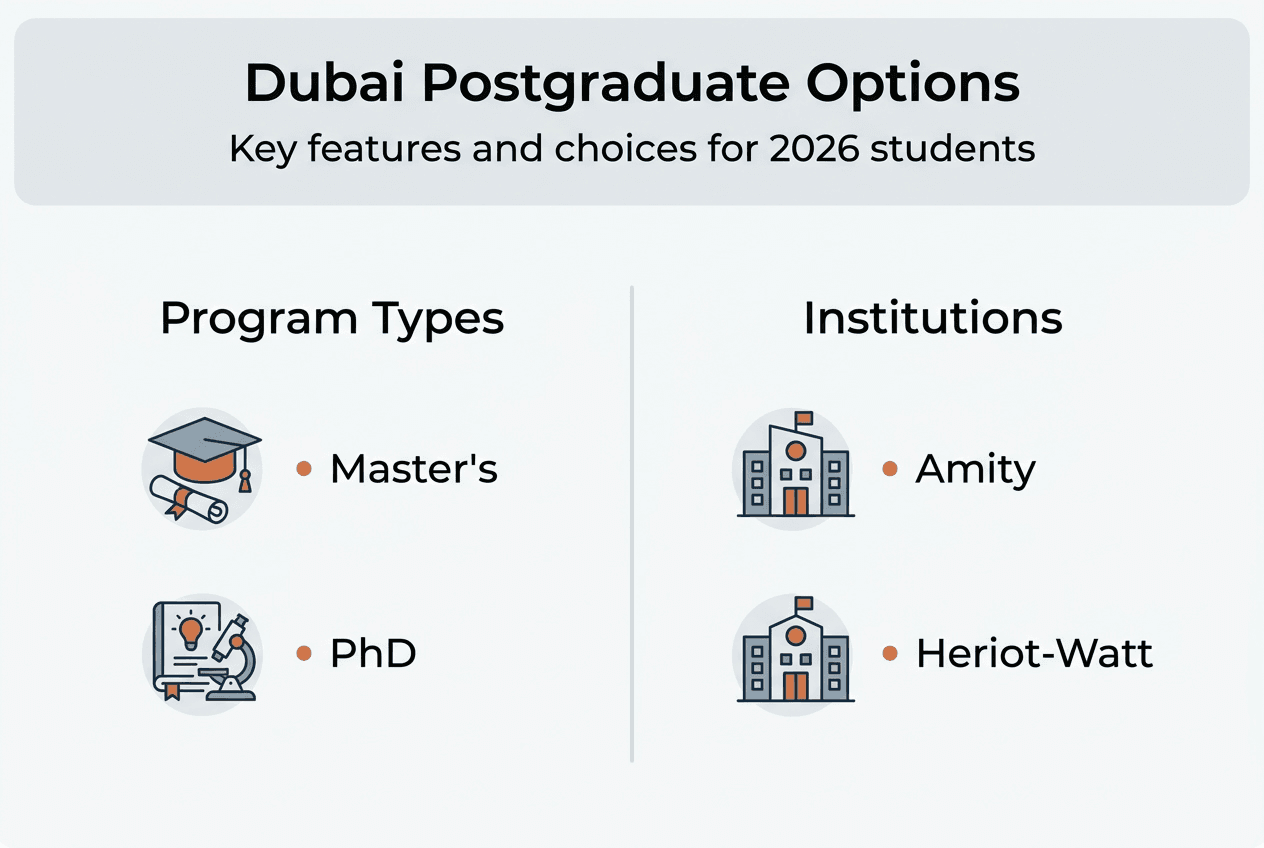
This table highlights how program length and fees differ, underscoring the importance of researching each institution’s specific offerings. Tuition listed may not include additional costs like registration fees, materials, or living expenses. Always verify current pricing directly with universities, as fees can change annually. The right program balances academic rigor with affordability and aligns with your post-graduation career plans, whether staying in the UAE or returning home.
Pro Tip: Contact current students or alumni through university networks to gain insider perspectives on program quality, faculty accessibility, and real-world career outcomes before committing.
Admission requirements and application process for Dubai postgraduate programs
Securing admission to a postgraduate program in Dubai involves a holistic evaluation that extends beyond grades. Universities assess your academic records, essays, recommendations, and CV to gauge your readiness for advanced study and potential contributions to their academic community. This comprehensive approach means you must present a well-rounded profile demonstrating intellectual curiosity, leadership capacity, and relevant professional experience. Most programs require a Bachelor’s degree plus at least two years of professional experience, ensuring cohorts bring diverse workplace insights to classroom discussions.
English proficiency is non-negotiable, typically verified through IELTS or TOEFL scores. Essays play a pivotal role, offering you space to articulate your motivations, career aspirations, and how the program aligns with your goals. Admissions committees scrutinize these narratives for authenticity and clarity, looking for evidence that you understand the program’s demands and can thrive in a multicultural academic environment. Strong reference letters from professors or supervisors who can speak to your abilities and character further bolster your application, providing third-party validation of your claims.
Application deadlines for 2026 are structured in four rounds, giving you flexibility to apply when your materials are strongest. The rounds typically fall on January 19, March 30, May 11, and July 6. Submitting early within your chosen round can improve your chances, as committees review applications on a rolling basis and may fill seats before later deadlines. Missing a deadline doesn’t necessarily end your opportunity, but it may push your enrollment to the following intake, delaying your academic timeline.
Here’s a step-by-step breakdown of the application process:
- Gather required documents including transcripts, degree certificates, CV, and reference letters.
- Complete the online application form, ensuring all fields are accurate and complete.
- Write and submit compelling essays that showcase your unique value and leadership experiences.
- Pay the application fee, which varies by institution but typically ranges from AED 500 to AED 1,000.
- Monitor your application status and respond promptly to any requests for additional information.
Each step demands attention to detail. Incomplete applications or missing documents can delay processing or lead to rejection, even if you’re otherwise a strong candidate. Double-check submission requirements on each university’s admissions portal, as specific programs may have unique prerequisites like portfolio submissions for creative fields or standardized test scores like the GRE or GMAT for business programs. For personalized guidance through this process, explore postgraduate admission guidelines that break down each institution’s expectations.
Pro Tip: Submit your application early within your preferred round to maximize consideration time and demonstrate your commitment to the program, which admissions committees often view favorably.
Tuition, fees, and financial considerations for studying in Dubai
Tuition costs for postgraduate programs in Dubai vary significantly based on institution, program length, and specialization. For example, the IBP program tuition is USD $81,840 plus VAT, with fees covering teaching, academic materials, library access, IT services, select meals, and accommodations during specific residency periods. This comprehensive fee structure means you receive substantial academic support, but it’s crucial to understand exactly what’s included to avoid budgeting surprises. Not all programs bundle services this way, so verify each institution’s fee breakdown before committing.

Beyond tuition, you’ll face living expenses including housing, transportation, food, and personal costs. Dubai’s rental market ranges from affordable shared apartments to premium studios, with monthly costs varying by location and amenities. Transportation via metro, bus, or ride-sharing apps adds to your budget, though Dubai’s public transit system is efficient and reasonably priced. Many students find that budgeting AED 3,000 to AED 5,000 monthly for living expenses provides a comfortable lifestyle, though this fluctuates based on personal choices and housing arrangements.
Visa fees and health insurance represent additional mandatory costs. Student visa processing typically costs AED 3,000 to AED 5,000, including medical tests and Emirates ID issuance. Health insurance is compulsory for all residents, with annual premiums ranging from AED 500 to AED 2,000 depending on coverage levels. Some universities include basic health insurance in their fee packages, while others require you to arrange it independently. Clarifying these details upfront prevents last-minute financial strain and ensures you meet all legal requirements for residency.
Financial aid options exist but vary widely. Some institutions offer merit-based scholarships reducing tuition by 10% to 50%, while others provide need-based grants or payment plans spreading costs across multiple installments. External scholarships from government programs or private foundations may also support your studies, particularly if you’re from specific countries or pursuing high-demand fields. Researching and applying for these opportunities early maximizes your chances of securing funding, as many scholarships have deadlines months before program start dates.
Key financial considerations include:
- Tuition fees covering academic services, materials, and sometimes meals or accommodations
- Living expenses for housing, food, transportation, and personal needs
- Visa processing and health insurance as mandatory costs
- Potential scholarship or financial aid opportunities to offset expenses
- Payment plan options allowing tuition installments rather than lump sum payments
Pro Tip: Verify exactly what your tuition fees include to avoid surprise costs, and begin financial aid applications early to secure funding before program deadlines approach.
Post-study visa options and career support in Dubai
Completing your postgraduate degree opens doors to exciting career opportunities in Dubai, but staying legally requires navigating visa options designed for graduates. The UAE offers three main post-study visas: Green Visa (5 years), Golden Visa (10 years), and Jobseeker Visa (60-120 days), each serving different career stages and qualifications. Understanding these pathways early helps you plan your transition from student to professional, ensuring you maximize your time in Dubai’s thriving job market without legal complications.
The Green Visa targets recent graduates with strong academic records or income potential. Eligibility requires a Bachelor’s degree minimum, valid health insurance, and meeting either a minimum monthly income threshold or a GPA criterion set by UAE authorities. This five-year visa provides stability as you establish your career, allowing you to work for multiple employers or even launch your own business without needing a traditional sponsor. It’s particularly attractive for graduates entering fields like technology, finance, or consulting where job mobility enhances career growth.
The Golden Visa represents the UAE’s commitment to retaining top talent, offering a decade of residency to high achievers in specialized fields. Graduates excelling in artificial intelligence, healthcare, engineering, or research may qualify, especially if they hold advanced degrees or have made notable contributions to their disciplines. This visa extends to family members, providing long-term security and positioning Dubai as your career base. While more selective than the Green Visa, its benefits make it worth pursuing if you meet the stringent criteria.
The Jobseeker Visa serves as a bridge for graduates who need time to secure employment. Valid for 60 to 120 days, it lets you remain in the UAE legally while attending interviews, networking, and finalizing job offers. Converting a student visa to a work visa requires a MoHRE work permit and residence status adjustment, processes your employer typically initiates once you accept a position. This conversion involves submitting your employment contract, educational credentials, and medical fitness certificates to immigration authorities.
Here’s how the visa options compare:
| Visa Type | Duration | Eligibility | Key Benefits |
|---|---|---|---|
| Green Visa | 5 years | Bachelor’s degree, health insurance, income/GPA criteria | Multi-employer flexibility, business ownership |
| Golden Visa | 10 years | High achievers in AI, healthcare, engineering, research | Family inclusion, long-term residency |
| Jobseeker Visa | 60-120 days | Recent graduates | Legal stay while job hunting |
Each visa type addresses different needs, so assess your qualifications and career plans to choose the best fit. If you’re unsure about eligibility, consult immigration specialists or university career services for personalized advice. Many institutions maintain relationships with employers and can facilitate introductions, improving your job search outcomes. Additionally, understanding visa validation processes for GCC residents can clarify documentation requirements if you’re transitioning from another Gulf state.
Pro Tip: Familiarize yourself with labor and residency regulations early to ensure a smooth post-study transition, avoiding visa gaps that could complicate your career launch in Dubai.
Explore your postgraduate study options in Dubai today
You’ve now seen the breadth of postgraduate programs, admission pathways, costs, and career opportunities Dubai offers. The next step is finding the program that aligns perfectly with your academic interests, budget, and professional goals. Our university finder Dubai tool simplifies this search by comparing programs across Dubai’s top institutions, delivering personalized matches based on your criteria. Whether you’re drawn to a research-intensive PhD or a professionally focused Master’s, our platform provides comprehensive program details and admission information to help you apply confidently.
Navigating the complexities of international postgraduate study can feel overwhelming, but you don’t have to do it alone. Our platform connects you with universities, streamlines application tracking, and offers guidance on visa processing and housing arrangements. Start exploring today to transform your academic aspirations into reality, positioning yourself for success in Dubai’s vibrant, opportunity-rich environment.
Frequently asked questions
How long does postgraduate study in Dubai typically take?
Master’s programs in Dubai generally last one to two years, depending on whether you study full-time or part-time and the specific field of study. PhD programs require a longer commitment, typically ranging from three to five years, as they involve original research, dissertation writing, and defense. Program duration also depends on whether you enter with prior research experience or relevant Master’s coursework. Always confirm exact timelines with your chosen institution, as some programs offer accelerated tracks or extended options for working professionals.
What are the main eligibility criteria for postgraduate study in Dubai?
Most postgraduate programs require a Bachelor’s degree and two years of professional experience to ensure students bring practical insights to academic discussions. Additional criteria include English proficiency demonstrated through IELTS or TOEFL scores, strong academic transcripts, compelling essays, and reference letters. Some programs may require standardized test scores like the GRE or GMAT, particularly for business or engineering disciplines. Leadership potential and relevant work experience significantly strengthen your application.
Can international students work in Dubai after graduating?
Yes, post-study work visa options include Green, Golden, and Jobseeker Visas that allow international graduates to remain in Dubai legally while pursuing careers. The Green Visa offers five years of residency for graduates meeting income or GPA thresholds, while the Golden Visa provides ten years for high achievers in specialized fields. The Jobseeker Visa gives you 60 to 120 days to secure employment. Transitioning from student to work visa requires obtaining a MoHRE work permit through your employer and updating your residence status with immigration authorities.
What is the cost of studying postgraduate programs in Dubai?
Tuition varies widely by program and institution, with some programs like IBP Dubai exceeding USD $81,840 plus VAT. Fees typically cover teaching, materials, library access, and sometimes meals or accommodations during residencies. Beyond tuition, budget for living expenses including housing (AED 2,000 to AED 4,000 monthly), transportation, food, and personal costs. Visa processing and mandatory health insurance add AED 3,500 to AED 7,000 to your initial expenses. Researching scholarship opportunities and payment plans can help manage these costs effectively.